If you’ve been pricing out a solar-plus-storage build — whether that’s a van conversion, a whole-home backup system, or a small commercial installation — you’ve almost certainly hit a fork in the road: LiFePO4 or AGM? These are two types of rechargeable deep-cycle batteries, meaning they’re designed to be drained and refilled repeatedly over months and years, not just used for a quick engine start. AGM stands for Absorbed Glass Mat, a mature lead-acid technology that stores energy in a lead plate and sulfuric acid chemistry sandwiched inside fiberglass matting. LiFePO4 — short for lithium iron phosphate — is a newer lithium chemistry that has taken over the solar storage world for reasons this article will make concrete. Neither is universally better. But once you run the real math on cycle life, usable capacity, weight penalties, and total cost of ownership, the decision becomes much cleaner than the upfront price tags suggest. That’s exactly what we’ll do here, in three structured comparison sections that cover the three most common buyer profiles.
| EDITOR'S PICK[ECO-WORTHY 3584Wh 12V 280Ah LiF…](https://www.amazon.com/dp/B0G79296WJ?tag=greenflower20-20) | Mid-tier[OPTIMA® Batteries High Performa…](https://www.amazon.com/dp/B00075OSCO?tag=greenflower20-20) | Budget pick[Renogy Deep Cycle AGM 12 Volt 1…](https://www.amazon.com/dp/B075RFXHYK?tag=greenflower20-20) | |
|---|---|---|---|
| Chemistry | LiFePO4 | AGM / Sealed | AGM |
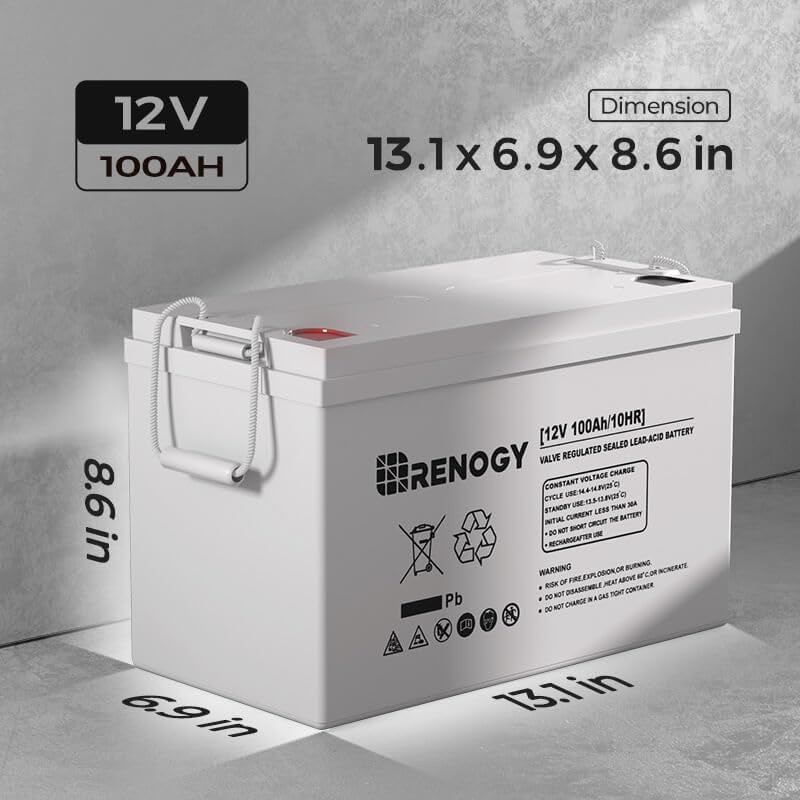
| Capacity | 280Ah | — | 100Ah |
| Energy | 3584Wh | — | — |
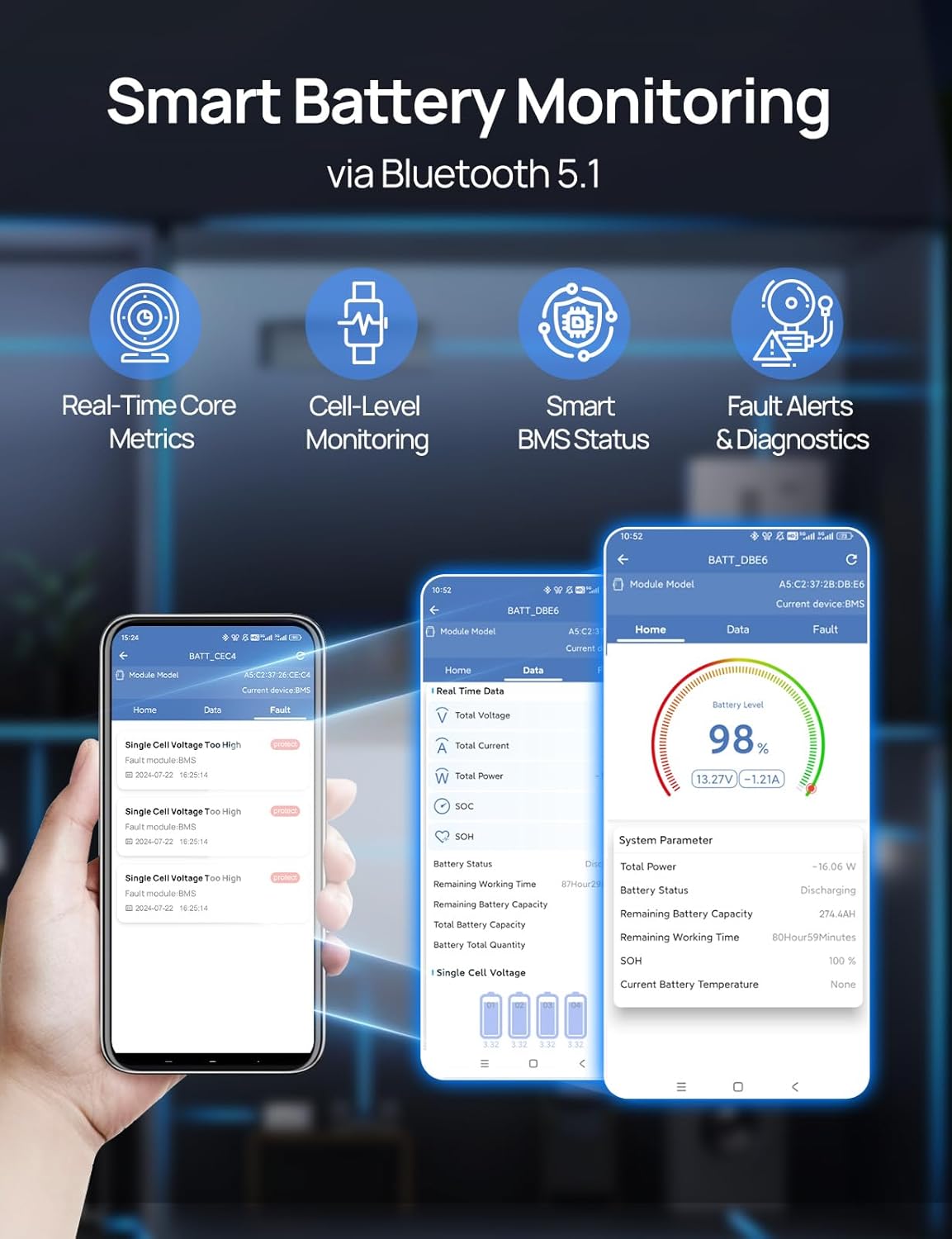
| Bluetooth | ✓ | — | — |
| Low Temp Cutoff | ✓ | — | — |
| Price | $405.99 | $337.99 | $134.75 |
| See on Amazon → | See on Amazon → | See on Amazon → |
What You’re Actually Comparing: Usable Capacity and Cycle Life
Before any dollar math, you need to normalize what “capacity” means across chemistries, because manufacturers don’t advertise their batteries the same way.
Depth of Discharge (DoD) is the percentage of a battery’s rated capacity you can actually use without damaging it. AGM batteries are typically rated for 50% DoD in sustained use — push a 200Ah AGM bank to 80% regularly and you will measurably shorten its life. LiFePO4 cells are rated for 80–100% DoD with no degradation penalty under normal thermal conditions.
That means a 100Ah AGM gives you roughly 50Ah of usable storage. A 100Ah LiFePO4 gives you 80–100Ah. On paper, a 200Ah LiFePO4 pack outperforms a 300Ah AGM bank — and weighs substantially less while doing it.
Cycle life is the second load-bearing variable. Published manufacturer datasheets, reviewed and summarized in PV Magazine’s 2024 chemistry primer for storage integrators (“LFP vs. NMC vs. Lead-Acid: A Chemistry Primer for Storage Integrators”), put the performance gap at roughly:
- AGM deep-cycle: 400–600 cycles at 50% DoD before capacity drops to 80% of rated
- LiFePO4: 3,000–6,000 cycles at 80% DoD before the same degradation threshold
- Cycle-life ratio: roughly a 6–10× advantage for LiFePO4
- Typical calendar life: AGM 3–5 years in daily cycling; LiFePO4 8–15 years
The U.S. Department of Energy’s Energy Storage Grand Challenge Cost and Performance Assessment (2022) documents this performance spread across chemistry types and identifies lithium iron phosphate as the dominant chemistry for stationary storage precisely because of this durability profile relative to lead-acid alternatives.
The practical consequence: if your system cycles daily — a van-lifer drawing down overnight, or a commercial facility doing daily peak shaving — AGM’s shorter cycle count means you’re replacing the bank multiple times inside LiFePO4’s first service life.
The Payback Math: Three Buyer Scenarios Compared
Here is where practitioners get burned. AGM looks cheaper at the shelf. LiFePO4 is cheaper over time. The crossover point depends on your cycling frequency — and it arrives faster than most buyers expect. The following three H3 subsections walk through each major buyer profile with a tier recommendation at the end of each.
H3: Daily-Cycling Builds — Van, Off-Grid Cabin, Peak-Shaving Commercial
Assume a 200Ah usable capacity target. You need roughly 400Ah of AGM (accounting for 50% DoD) or 250Ah of LiFePO4 (accounting for 80% DoD).
Using 2026 mid-market pricing — AGM deep-cycle from quality brands running approximately $150–$200 per 100Ah; LiFePO4 drop-in replacements from established brands running approximately $280–$380 per 100Ah — the builds price out like this:
| Metric | AGM | LiFePO4 |
|---|---|---|
| Required rated capacity | 400Ah | 250Ah |
| Approximate upfront cost | $600–$800 | $700–$950 |
| Expected cycle count | ~500 cycles | ~3,500+ cycles |
| Replacements over 10 yrs (daily cycling) | ~6–7× | 0–1× |
| 10-year battery spend | $3,600–$5,600 | $700–$1,900 |
Clean Technica’s 2025 market update on LFP adoption in commercial and industrial storage (“LiFePO4 Adoption in C&I Storage: Price Curve and Market Share Update”) identifies this total-cost-of-ownership calculation as the primary driver of LFP’s market share gains. The per-cycle cost of LFP is now several times lower than AGM at real-world daily cycling rates — a gap that has widened as LFP cell prices have declined significantly since 2022, a trend tracked in NREL’s Cost Projections for Utility-Scale Battery Storage: 2023 Update.
For daily-cycling applications with a project lifespan of five years or more, LiFePO4 is the right call in nearly every budget scenario. The higher upfront spend typically recoups within two to four years of avoided battery replacements.
ECO-WORTHY
$405.99
In stock on Amazon
Check price on AmazonH3: Occasional Cycling — Seasonal Cabin, Emergency Backup, Infrequent Use
If your battery bank cycles fewer than 50 times per year — a vacation property that draws down on weekends, or a UPS-style backup that sits at float voltage most of the time — AGM’s math recovers substantially.
At low cycle counts, the battery may hit its calendar life of three to five years before exhausting its cycle budget. In that case, you’re comparing purchase price more directly, and AGM’s lower upfront cost is a legitimate factor. EnergySage’s 2025 Home Battery Storage Buyer’s Guide notes that for purely occasional backup use cases with infrequent cycling, AGM remains cost-competitive because the cycle-life penalty never fully triggers.
The decision rule: under 50 cycles per year with light load and a stable indoor installation environment, AGM is defensible — especially where upfront capital is constrained. You are not leaving significant money on the table over a five-year horizon the way daily-cycling buyers are.
Renogy
$134.75
In stock on Amazon
Check price on AmazonH3: Retrofit and Legacy System Upgrades — Replacing a Dead Bank Mid-Project
This scenario is the one most likely to catch buyers off guard. When an existing AGM bank fails and needs replacement, the chemistry swap to LiFePO4 carries infrastructure compatibility costs that must appear in any honest budget comparison.
AGM and LiFePO4 have different charging profiles. AGM uses a three-stage charge profile — bulk, absorption, float — that virtually every solar charge controller supports natively. LiFePO4 requires a charge profile with no float stage (or a very low float voltage) and a specific absorption voltage, typically 14.2–14.6V for a 12V system, with no trickle or float thereafter. Sending a standard AGM profile into a LiFePO4 bank will either chronically undercharge it or stress the cells depending on where the float voltage is set.
Most modern MPPT charge controllers from manufacturers such as Victron Energy and Renogy now include LiFePO4 presets or custom profile programming. But older installed systems may require a controller upgrade — a $150–$400 line item depending on capacity — that must appear in the retrofit budget. The same applies to inverter-chargers: units that do not support programmable charge profiles require replacement before a chemistry transition is safe.
Solar Power World’s 2024 AGM Battery Market Outlook for Backup and Off-Grid Applications notes that retrofitting complexity is one of the key reasons AGM retains meaningful market share in replacement cycles for legacy residential systems. System owners facing a dead AGM bank under time pressure frequently default to a like-for-like AGM replacement rather than engineering a chemistry transition on a deadline.
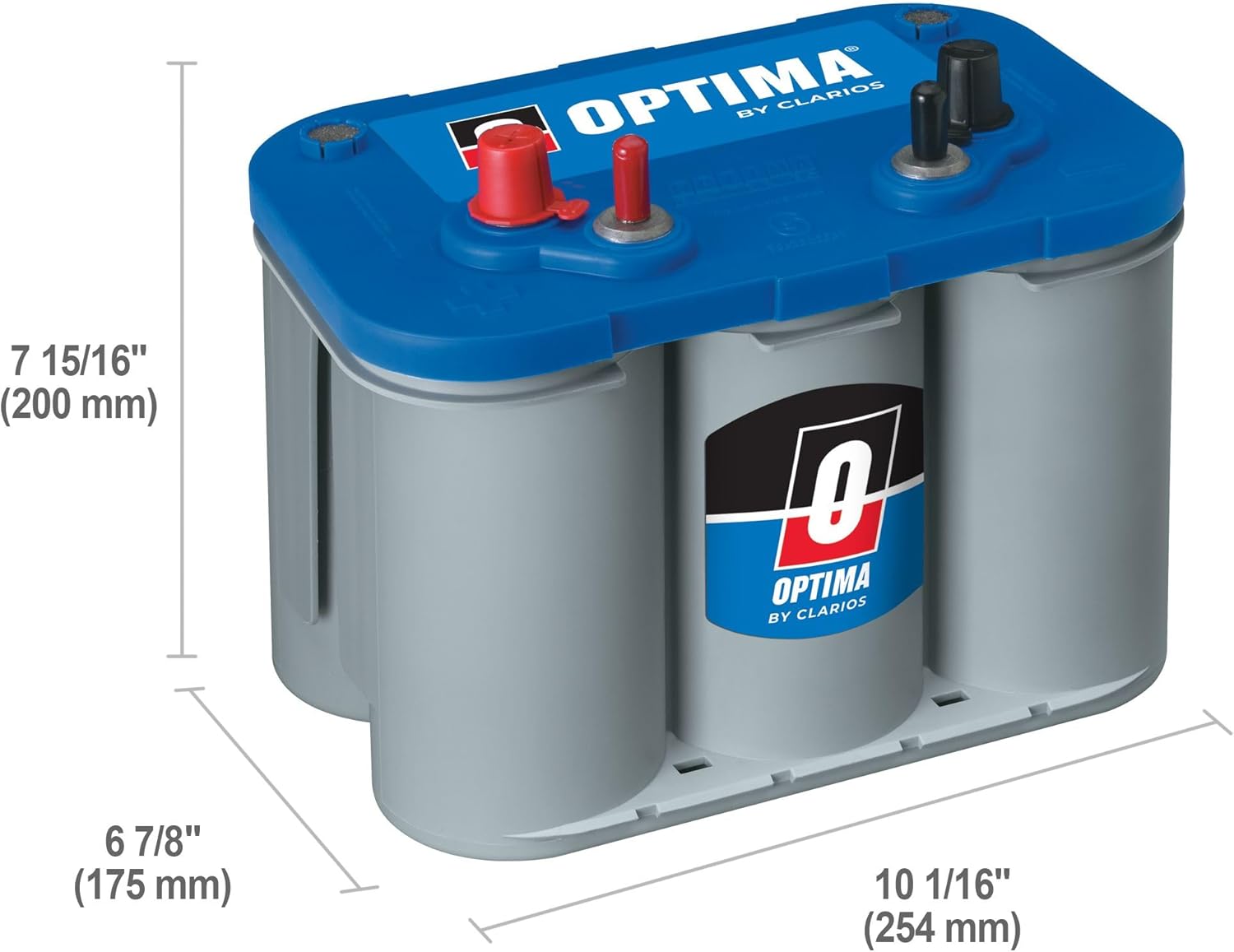
If the existing charge infrastructure already supports LiFePO4 profiles, or if a controller upgrade is already in the project budget, the retrofit math falls into the daily-cycling scenario above and LiFePO4 wins. If the controller is incompatible and the owner is unwilling to replace it, AGM is the pragmatic mid-tier answer.
OPTIMA®
$337.99
In stock on Amazon
Check price on AmazonWeight, Space, and Thermal Behavior: The Installation Variables
Payback math is one axis. Installation reality is another, and for mobile, rooftop-constrained, or weight-rated applications, chemistry choice is often decided before a spreadsheet opens.
Weight: AGM lead-acid is heavy by nature of its chemistry. A 100Ah AGM battery typically weighs 60–70 lbs. A 100Ah LiFePO4 drops to approximately 25–31 lbs. For the 400Ah AGM bank in the daily-cycling scenario above, you are managing 240–280 lbs of battery mass. The equivalent LiFePO4 bank at 250Ah weighs roughly 65–80 lbs total. In a van build, this is payload capacity and handling ergonomics. In a rooftop or raised-floor commercial installation, it is structural load engineering that affects rack design and permitting.
Space: LiFePO4’s higher energy density means the physical footprint of an equivalent usable-capacity bank is 30–50% smaller. For cramped equipment rooms or battery enclosures already sized for a legacy AGM bank, this matters significantly for retrofit projects where the enclosure cannot be enlarged.
Thermal and safety profile: AGM holds a genuine advantage in high-ambient-temperature environments and carries no thermal-runaway risk. LiFePO4 is the safest lithium chemistry — it lacks the volatile oxide cathode of NMC cells and has a substantially higher thermal runaway threshold, as documented in PV Magazine’s 2024 chemistry primer referenced above — but it still requires a Battery Management System (BMS) to prevent overcharge, over-discharge, and cell imbalance. Most drop-in LiFePO4 replacements have the BMS integrated at the unit level; for large-format or custom builds, it is a separate engineering line item.
Cold temperature performance: AGM holds an edge in sub-freezing environments. LiFePO4 charging below 32°F (0°C) without a heated battery enclosure or low-temperature BMS cutoff can cause lithium plating on the anode — a form of irreversible capacity damage. For unheated northern installations or year-round van builds in cold climates, either specify a self-heating LiFePO4 pack (now standard on several commercial-grade units) or budget for a thermal enclosure. If neither is feasible, AGM’s cold-weather tolerance is a legitimate differentiator and not a reason to dismiss it out of hand.
The Decision Matrix: If X, Then Y
After the math, here is where the decision should land for practitioners with a specific project in front of them.
Daily-cycling system, 5+ year horizon: LiFePO4 in nearly every case. Ten-year total cost of ownership is lower, usable capacity per dollar at year one is higher, and weight simplifies installation. The higher upfront spend recoups within two to four years of avoided replacements.
Hard upfront budget ceiling: AGM gets the project done. Document in your O&M projections that the battery bank will require replacement two to three times over a decade; build that cost into any long-term asset model.
Low-cycle emergency backup, fewer than 50 cycles per year, stable indoor environment: AGM is genuinely competitive. The cycle-life penalty never fully triggers, charging infrastructure is universally compatible, and the lower purchase price is a real benefit.
Weight, space, or structural load is a binding constraint: LiFePO4, full stop. There is no engineering workaround that makes AGM’s mass density acceptable in weight-limited mobile or rooftop applications.
Unheated installation in a cold climate: Specify self-heating LiFePO4 or budget for a thermal enclosure. If neither is feasible and the site sees sustained sub-freezing temperatures, AGM’s cold tolerance is a legitimate reason to stay with the chemistry.
The short version: LiFePO4 wins the math for anyone cycling seriously and over a multi-year horizon. AGM remains defensible at the margins — low-cycle applications, hard upfront budgets, legacy infrastructure retrofits, or cold-climate sites without thermal management. Know which scenario you are in before the purchase order goes out.